In our cells, mitochondria act like miniature power plants, converting energy from food into ATP (the cell's "energy currency") through aerobic metabolism, powering every moment of life. Central to this process is the electron transport chain—a series of protein complexes that transfer electrons like a relay, ultimately converting oxygen into water and producing ATP. However, this "power plant" isn't always stable. When we're awake, our brain's neurons are active, and the demand for electron transport from mitochondria surges.
1. Mitochondrial Stress Response During Wakefulness
In mammals and model organisms such as the fruit fly (Drosophila melanogaster), mitochondria generate ATP through the oxidative phosphorylation (OXPHOS) system, a process that relies on a proton gradient established along the electron transport chain (ETC). Research has found that mitochondria in dorsal fan-shaped body projection neurons (dFBNs), a sleep-regulating hub, exhibit specific stress during prolonged wakefulness:
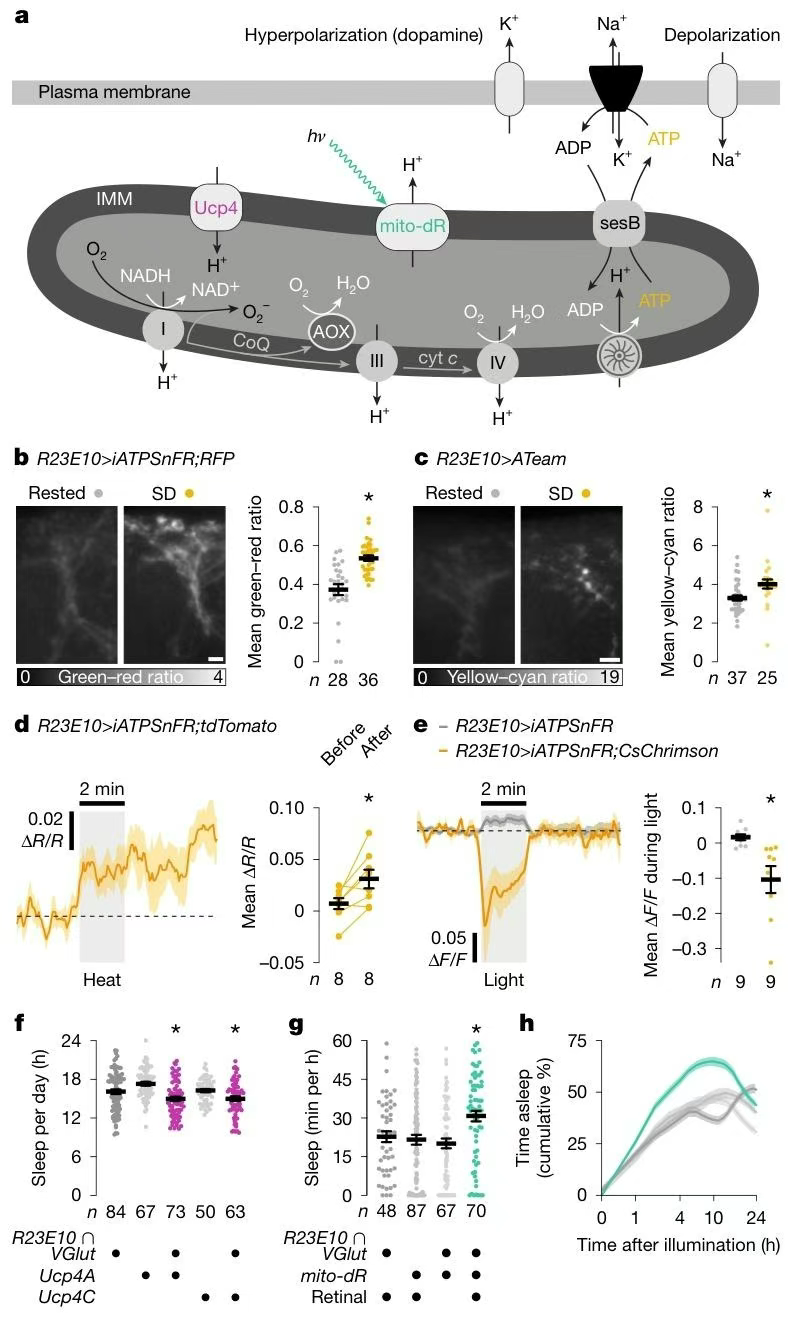
ETC electron leak: Inhibition of neuronal activity leads to reduced ATP consumption, resulting in an imbalance between electron donors (NADH/FADH₂) and acceptors (O₂) at ETC complexes I and III, triggering the generation of reactive oxygen species (ROS) such as superoxide anions (O₂•⁻).
Membrane lipid peroxidation: ROS attack the cardiolipin of the mitochondrial inner membrane, leading to depolarization of the membrane potential (Δψm) and opening of the permeability transition pore (mPTP).
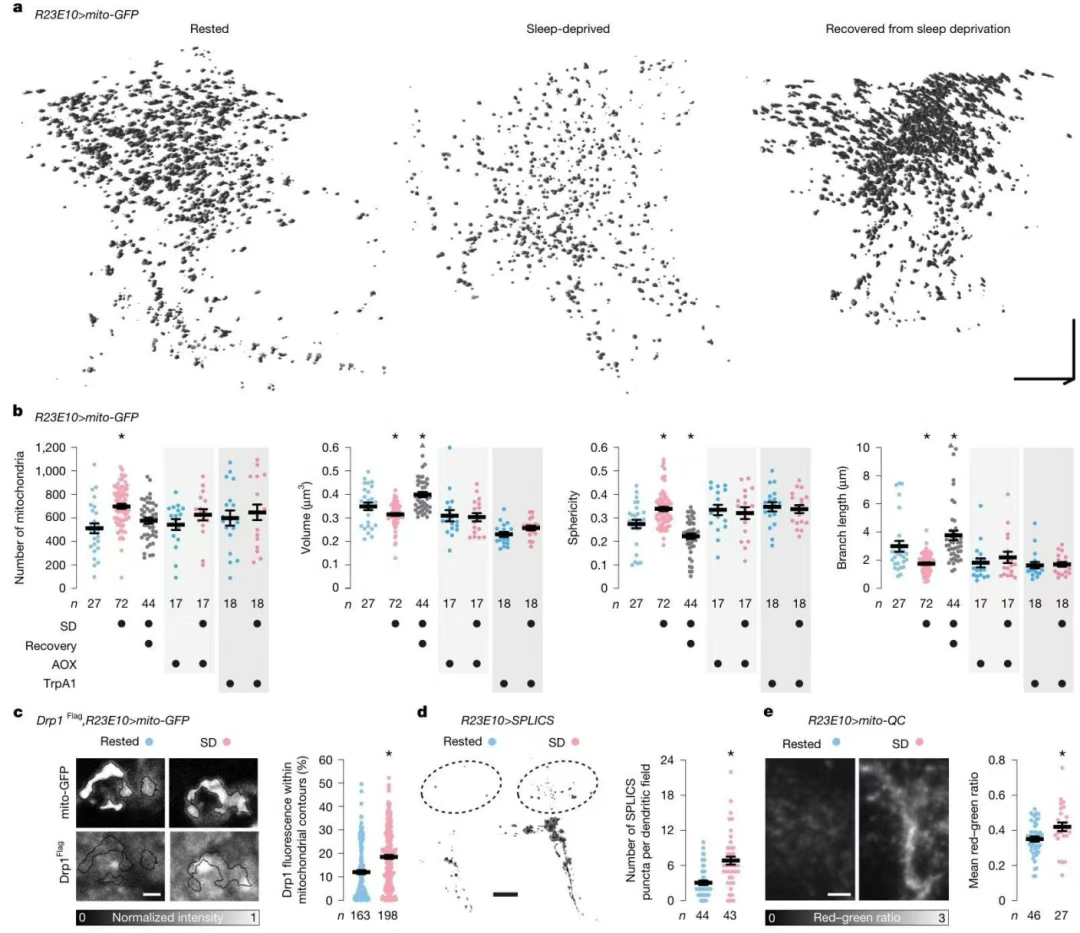
Fission-fusion imbalance: Drp1 mediates excessive mitochondrial fission, resulting in fragmented mitochondria.
Transcriptional reprogramming: Activation of mitochondrial biogenesis genes such as PGC-1α/NRF1 and suppression of synaptic vesicle-related genes (such as Syt1).
Molecular evidence: Sleep pressure markers (such as p38 MAPK phosphorylation is positively correlated with mitochondrial ROS levels (Current Biology 2021;31:1-12).
2. Sleep-mediated Mitochondrial Repair Mechanisms
Sleep restores mitochondrial homeostasis through three interconnected pathways:
Repair Pathway Molecular Mechanism Experimental Evidence
Mitochondrial autophagy activation: The PINK1/Parkin pathway recognizes depolarized mitochondria, and LC3-II mediates autophagic-lysosomal degradation. The LC3-II/LC3-I ratio in dFBNs increases 2.3-fold after sleep deprivation (Science 2016;353:1433).
Fusion dynamics are reestablished: Opa1 mediates mitochondrial inner membrane fusion, while Mfn1/2 regulates outer membrane fusion, restoring tubular network structure. Mitochondrial branch length increases by 37% after sleep recovery (Nature Communications 2020;11:923).
Metabolic homeostasis is reset: Restoration of neuronal excitability increases ATP consumption by 32% and reduces ETC reduction pressure (NADH/NAD⁺ ratio decreases). Optogenetic activation of dFBNs can mimic sleep-induced sleep (Neuron 2018;100:1443)
3. Causal validation of mitochondrial dynamics on sleep behavior
Dose-effect relationship established through genetic intervention:
Fission-promoting model: Overexpression of Drp1 (K38A mutant) in dFBNs
83% increase in mitochondrial fragmentation → 41% decrease in total sleep time (p<0.001)
No rebound sleep observed after sleep deprivation
Fusion-promoting model: Opa1 overexpression + Drp1 RNAi
1.8-fold increase in mitochondrial network integrity index → 52% increase in sleep latency
ETC repair model: Expression of mitochondria-targeted alternative oxidase (AOX)
Bypassing complex III/IV electron leak → 65% decrease in ROS generation → Reduced sleep stress scores
Conclusion: Mitochondrial morphological dynamics are upstream effectors of sleep-wake regulation (eLife 2022;11:e82392)
4. Intervention Strategies Based on Mitochondrial Mechanisms
Research Progress on Nutritional Interventions Targeting Core Pathological Links:
Target Compound Mechanism of Action Level of Clinical Evidence
Mitochondrial Autophagy: Urolithin A activates the BNIP3/NIX pathway and enhances PINK1 stability. Positive Phase II results.
Biogenesis: PQQ induces PCG-1α expression and promotes NRF2 nuclear translocation. Animal model validation.
ETC Function: Ubiquinol (CoQ10) acts as a transporter between complexes II/III, reducing the residence time of hemiubiquinone free radicals. Meta-analysis validation.
Note: The above interventions must be combined with sleep cycle regulation (such as enhancing NREM slow-wave activity) to achieve synergistic effects.
5. Theoretical Framework: Sleep as an Evolutionary Adaptation for Maintaining Metabolic Homeostasis
The endosymbiotic origin theory of mitochondria suggests:
Aerobic metabolic cost: OXPHOS generates 10⁷ ATP molecules are accompanied by 0.1-2% electron leakage (ROS production).
Damage accumulation model: The mutation rate of mitochondrial DNA is 10-20 times higher than that of nuclear DNA, and fragmented mitochondria are more likely to accumulate mutations.
The evolutionary conservation of sleep: Similar repair periods exist from nematodes to mammals, and their duration is negatively correlated with basal metabolic rate (r=-0.81).
Sleep is essentially a periodically activated cellular quality control system (CQC). Its dysfunction is directly linked to aging and neurodegenerative diseases (Cell 2023;186:1380).